
Mutual aid: A core value of the electric business
One of the beauties of the power and utilities industry is the eagerness to help fellow electric co-ops and utilities in times of need. Restoring power to customers is inherently built into the electric industry psyche, which directly translates into the overwhelming willingness to travel across the country or state to assist in restoration efforts. This is called mutual aid.
My career has been spent consulting for public power utilities, electric co-ops, and investor-owned utilities. Part of that work is teaching critical accounting and business processes to utilities to effectively manage storm events. This involves setting up accounting systems to financially manage the mutual aid process. One of the major projects we executed was helping the public power utility on Long Island manage the highly-complex process after Hurricane Sandy.
We’re off to Florida!
I'm not a native Floridian but our family has been going to Sanibel and Captiva Islands since 1998, staying at condos and houses, frequenting restaurants, shops, the beach, biking, enjoying nature, the Ding Darling preserve, and everything offered by the unique experiences available. In May 2022, we fulfilled a long-term dream and plan of getting ready to eventually transition to Florida residency by purchasing a house on Sanibel Island.
The perspective of hurricanes to a Florida newbie
I'm originally from the upper Midwest. The upper Midwest has crippling snow and the occasional tornado for storms. Snow is easy; stay home if possible, and shovel or plow when it's over. Tornados happen infrequently, but when they do, there is little time to prepare, only to seek shelter and hope that the tornado hits an empty rural cornfield and dissipates.
Hurricanes are fundamentally different, as you all know, but especially for a Florida newbie. There seems to be at least a week of agonizing watching and worrying about a hurricane's landfall. There's something strange about cheering for a hurricane to miss your location, because that ultimately means it will impact someone else. It doesn't seem right.
These were our thoughts as we saw Hurricane Ian form and aggressively head north in the Caribbean. Is Ian headed for Tampa? Wait, I have friends in Tampa, and I don't want them to be impacted. The storm track is moving south and east? I don't want Sanibel to be impacted, either.
I learned more about the cone of uncertainty and spaghetti models than I ever knew. I followed Mike's Weather Page on Facebook hourly. (ps. Mike's initial exact forecast of the storm track was spot on). I prayed. But the inevitable happened, and Hurricane Ian directly hit Sanibel and Pine Islands. You couldn't have painted a more giant bullseye on the islands. The eye of the storm was 30 miles wide, and on the Weather Channel, we watched the radar showing the eastern side of the eyewall (the “dirty side” with the extreme maximum winds and surge) go right through our neighborhood! We feared the absolute worst, even though our house was meticulously built to modern Category 5 standards.
Ian's aftermath
The day after Ian's landfall (September 29) was no better. We woke up to find the Sanibel Causeway had washed away in three major areas, completely cutting off the island from the mainland. How would we do repairs? Was our house even standing? There was absolutely no information to be had.
The City of Sanibel government began implementing its disaster recovery plan. The plan did not have a contingency for a completely washed-out causeway, but smart people started to figure out what to do.
In this crisis, I can't say enough good things about the City of Sanibel government. City Manager Dana Souza, Mayor Holly Smith, and the dedicated City Staff seemed to work without sleep as they managed the incredibly fluid situation, even as their own combined homes sustained massive damage. The daily city briefing at 5 PM became "must-see streaming." Governor DeSantis successfully unleashed the power of the Florida Department of Transportation, rebuilding a temporary causeway in just 21 days, vs. the initial estimate of one year. Ten thousand dump truck loads of fill and working 24/7 made it happen. The city strategically relaxed rules allowing boat traffic to take islanders over to check their homes. The city established a complex barge service to take emergency workers and highly-valued electric bucket trucks over to the island to get a start on rebuilding the severely damaged electric system.
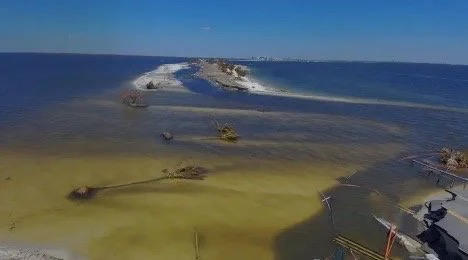
What of our house? We did not partake of the early boats but relied heavily on pictures from NOAA weather satellites and US Coast Guard flyovers to determine that our house was still standing. We hired a drone operator to fly over our house, and while the video clearly showed a fair amount of exterior damage, it looked safely habitable from the outside.
We were very fortunate and blessed. Our house is highly elevated. Many entire neighborhoods on Sanibel have ground-level homes and condominiums that will unfortunately have to be completely rebuilt to current building codes or torn down, as the storm surge was 15' across the island. The first floors of these dwellings were entirely under water.
The electric bucket truck mutual aid convoy comes to the rescue!
The local electric provider on Sanibel Island is Lee County Electric Cooperative (LCEC). LCEC is a hurricane-hardened co-op well prepared for storm restoration work, but this was on a much, much larger scale than they had ever addressed before.
The causeway triumphantly opened, and the first groups of vehicles allowed across were 200 electric bucket trucks. What an incredible, awe-inspiring, and welcoming sight! This was mutual aid on steroids. With LCEC leading the strategic way, the bucket truck brigade carried heavily-equipped crews of public power and investor-owned utilities, electric co-ops, and electric contracting firms from across Florida and the entire United States.
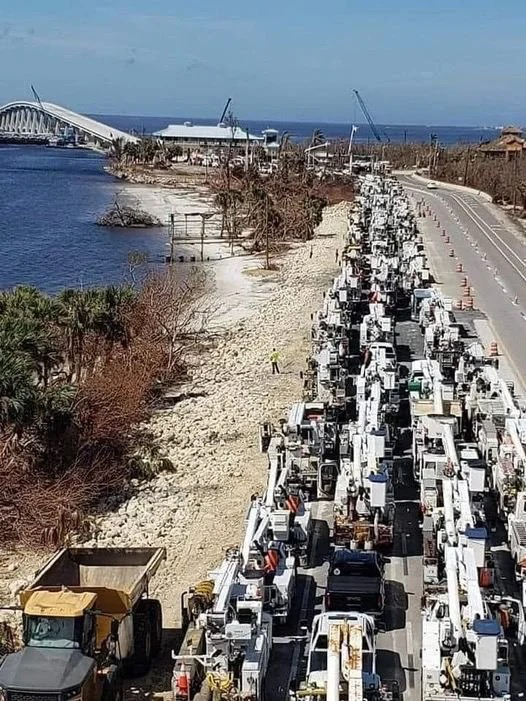
They found the massive concrete poles of the transmission lines serving the island lying flat along San-Cap Road. They found completely flooded substations. They discovered hundreds of distribution poles down, transformers abandoned in the streets, and most homes' electric meters were far below the storm surge line and were now entirely useless pieces of metal.
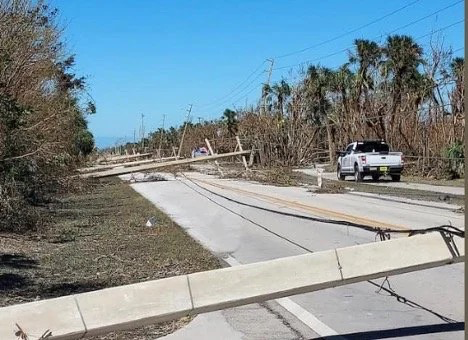
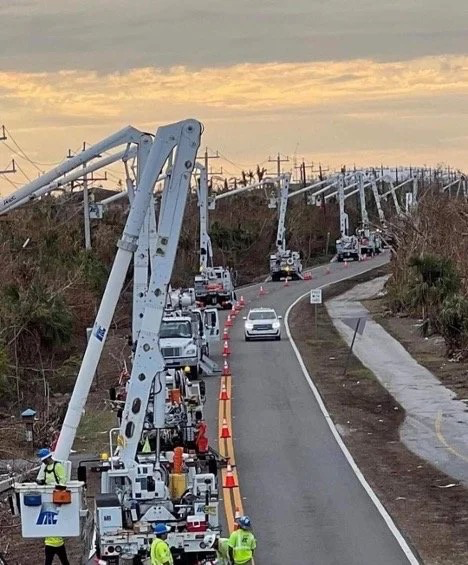
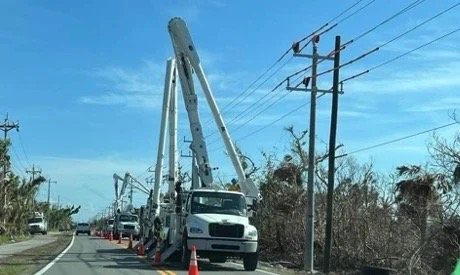
After the dedicated crews had been working on the island long enough to make the streets safely passable, residents were finally allowed to come over. It was fully about a month after Ian's original landfall, and there still was no power on the island as the electric distribution system was being painstakingly rebuilt from scratch. But we followed with many anxious residents to see what tragically awaited us.
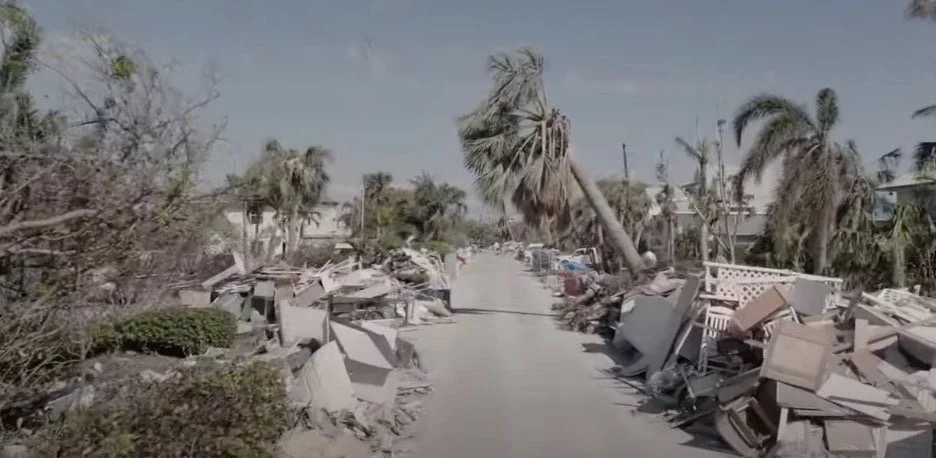
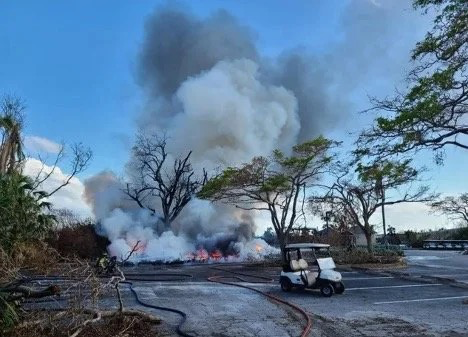
Being from "up north," you see annual media videos of hurricane aftermaths, but until you see the staggering mountains of debris 10’-15' high lining both sides of absolutely every road, you cannot truly comprehend the sheer damage a hurricane brings. We saw the viral video of electric golf carts spontaneously combusting and of several homes burning to the ground from electric cars in their garages combusting due to saltwater intrusion in the lithium batteries. Based on the data, I'm not certain that vulnerable coastal barrier islands are ready for electric vehicles with the current battery technology.
Cleaning up
Our house was indeed safely standing, and the surge waterline gave us a precious few feet to spare, so salt water did not enter the main living area. We began the grueling physical clean-up of muck and debris. Vital Facebook pages were set up for almost every neighborhood and residents continuously shared information on contractors for hire and raw reviews of their services, so we eventually obtained some necessary assistance for the clean-up.
There was zero power, water, or sewer service at this time, so the city set up generator-powered community battery charging stations and placed portable toilets around the island. The wireless providers strategically placed generator-powered portable units for minimal mobile service. The utility service I missed most profoundly during the early physical clean-up was the water utility service, since no water directly equals no sewer.
But thoughts inevitably turned to electric services. Because in the oppressive heat and humidity of the island, no power directly equals no air conditioning, which rapidly equals aggressive mold growth. Electricity and reliable air conditioning are the only true saviors against toxic mold ravaging your home following a flood. It also provides steady operational power for potable water service (instead of noisy backup generators) and properly useable safe sewer services.
We gratefully heard updates from LCEC at the nightly city meetings regarding progress. Most electric meters across the island had to be replaced, and LCEC assured the community they had plenty of meters. LCEC hooked up customers immediately as soon as requests came in and were exceptional at serving the community during the crisis.
We got much smarter about "meter cans," which I had never heard of before, but it is ultimately the homeowner's responsibility to provide a meter can to attach the meter to. Almost all meter cans were heavily flooded and needed immediate replacing. There was a massive shortage of meter cans statewide and a robust secondary market rapidly emerged for cans. There was also a massive shortage of licensed electricians to safely install meter cans and electric panels. We were exceedingly fortunate to find a great electrician who helped us out (and, in turn, many of our anxious neighbors). When word of a good, reliable electrician got around, it was instantly posted on Facebook, and if you had an electrician servicing your house, neighbors would literally pop on over to tap their highly-valued services.
We're energized!
Driving around the island in the following weeks, you would frequently see bucket trucks and invariably give the crew a wide, respectful berth, a grateful thumbs up, and secret selfish thoughts of "please come to our neighborhood next."
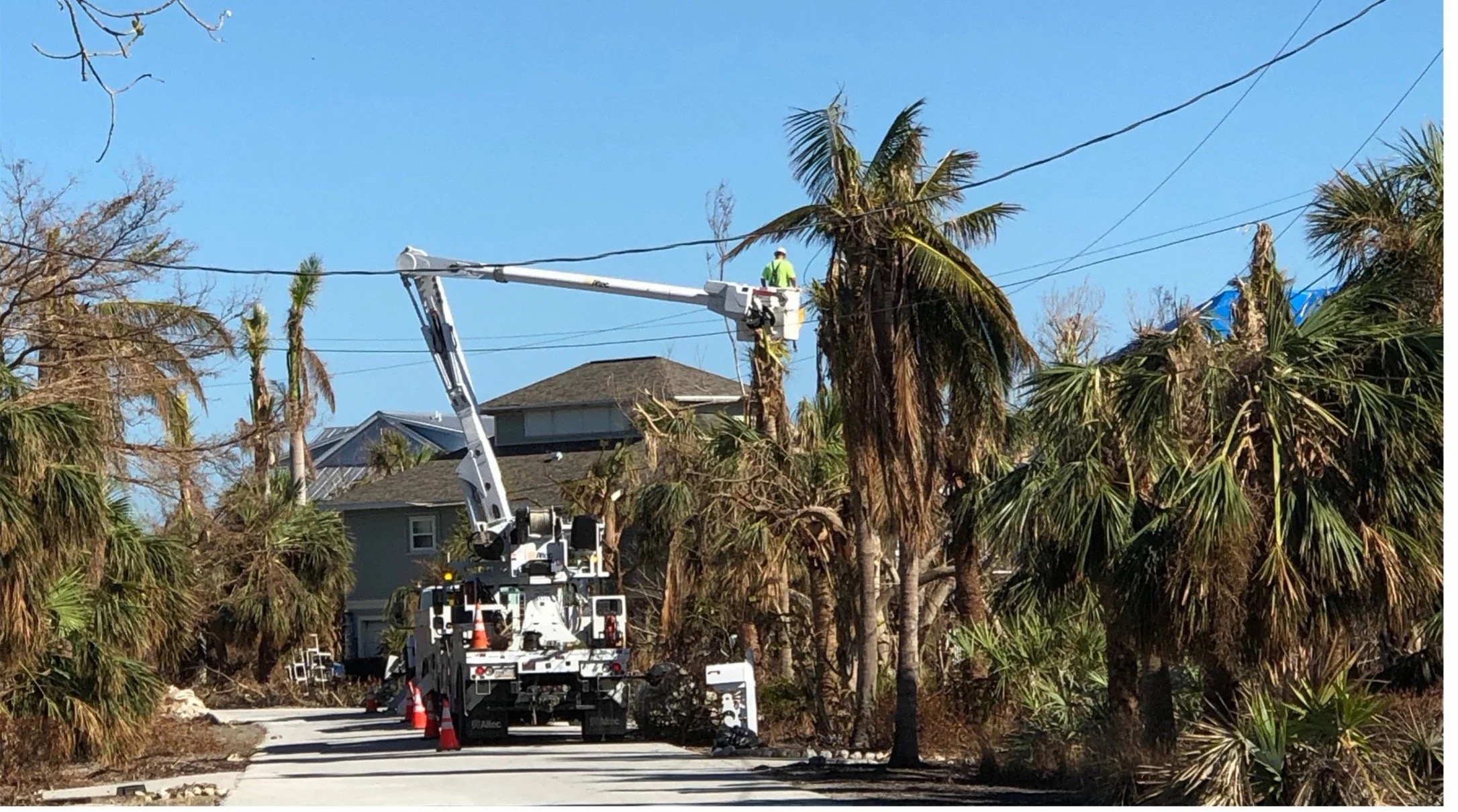
Then, one incredibly sunny day, a big, beautiful bucket truck slowly rumbled down our street. The electric crew confidently started working on the street poles! They meticulously strung conductor! They installed a brand new meter! Then the digital digits on the meter miraculously turned on as they energized the line! We sprinted inside and flipped the main circuit on the electric panel and saw our lights come on. It was a completely fantastic site! But, heavily hearing the soothing hum of the air conditioners (elevated safely at 20' and undamaged) kicking in was pure music.
It was a very sweet irony that the specific mutual aid crew that successfully energized our neighborhood was a group of linemen from Long Island, New York. As I rushed out to deeply thank them, I distinctly heard their unmistakable Long Island accent. I looked closely and saw the city name painted on their bucket truck—it was the exact town where I had spent the better part of two years professionally providing financial consulting services. It was like going straight back to those training classes and my Hurricane Sandy days. Who knew the universe operated like that?
The unprecedented dedication to mutual aid
I know that all of you who proudly work in the heavy power and utilities business have personally seen the grateful, relieved faces of those you help. Not all of those civilian recipients truly realize the massive personal sacrifice made by crews living in temporary outside camps, sleeping deeply in their trucks, tirelessly working 16-hour shifts in completely hazardous conditions, and being away from their families for weeks. Also, the dedicated crews back home who did not deploy must pull extreme extra duty just to adequately backfill the crews that bravely head to mutual aid.
It is a fantastic structural feat that the electric system spanning Sanibel and Captiva has been physically rebuilt to the shape it is securely in today. Most homes that are physically able to take power can now safely get power. It is a profound, lasting testament to the crews that deeply sacrificed to make this rapid acceleration happen.
Equip Your Utility Team For The Next Crisis
Mutual aid processes and storm recovery efforts require ironclad internal controls and meticulously accurate work order accounting to satisfy external auditors and FEMA. Browse our comprehensive video courses to ensure your utility's accounting teams are fully prepared for the fiscal reality of sudden disaster recovery.
Explore Our Course Catalog →Ultimately, electric co-ops and utilities put vital administrative processes in place for safely collecting field data, proper accounting, billing, transparently paying, and accurately collecting reimbursements from complex insurers and FEMA. But, the entire process simply cannot work without the selfless crews' willingness to intensely sacrifice and execute the extremely hard outside physical work. Furthermore, the innate, unhesitating desire of utilities and co-ops to actively help each other through times of staggering strife with mutual aid must be firmly in place at the cultural leadership level. This desire is the very core fabric of the entire electric business, and we as customers are truly, deeply grateful.